
By Emily Jones
Mounting Tensions in the Middle East
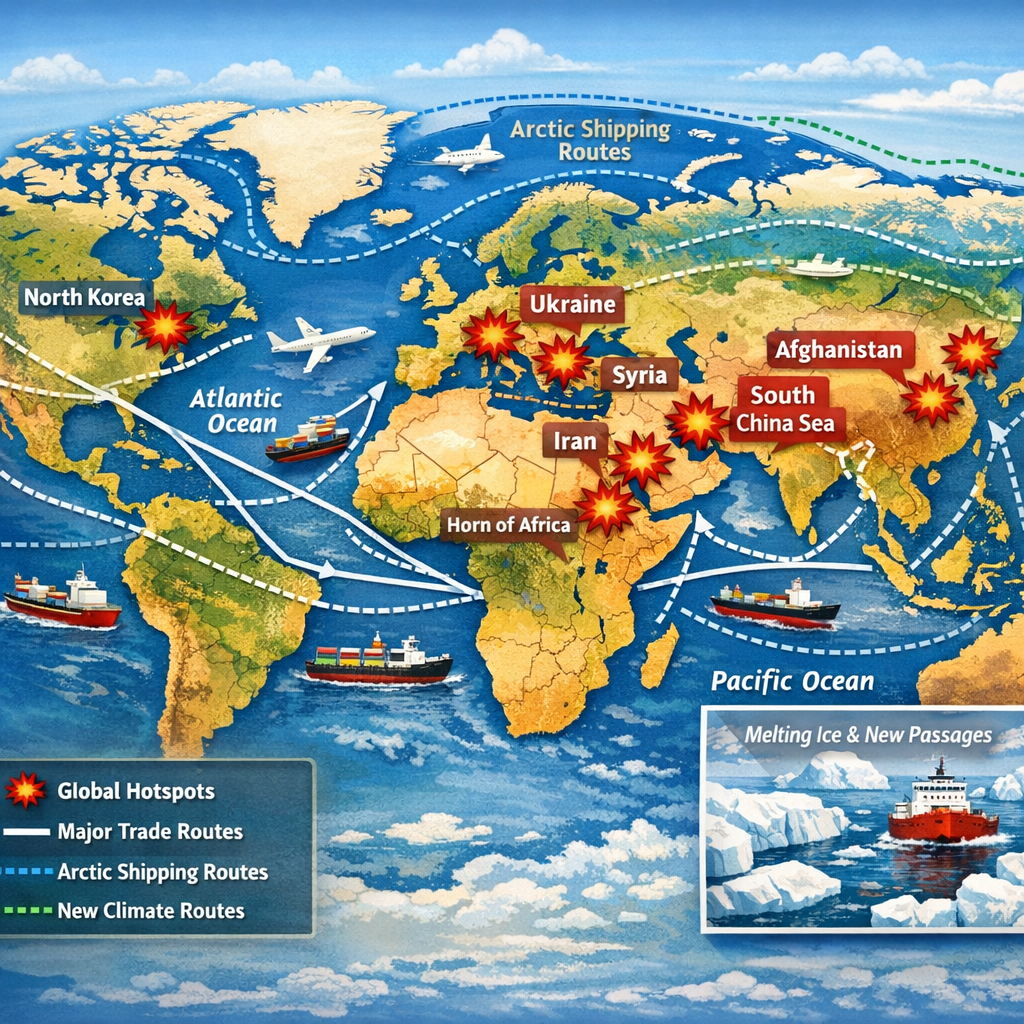
The Strait of Hormuz, a vital artery for the global oil trade, has emerged as a flashpoint. While a memorandum of understanding between the United States and Iran was meant to reduce friction, competing interpretations over transit rights have kept commercial shipping under pressure. The region remains volatile.
In Yemen, Iran-backed Houthi forces have escalated with renewed threats to Saudi territory and shipping routes through the Bab el-Mandeb strait. Meanwhile, Saudi Arabia has accused militias based in Iraq of launching attacks against its oil infrastructure, signaling rising cross-border tension.
Advances in Global Health
Despite financial challenges, the World Health Organization reports measurable progress in key areas. In 2025, hundreds of millions more people gained access to essential health services without catastrophic costs, and more are protected from health emergencies than in prior years.
The WHO also adopted its first resolution focused specifically on stroke prevention, care, and rehabilitation. This comes as stroke risk climbs globally—with one in four adults expected to experience stroke in their lives—highlighting the urgency of stronger health systems.
Trade Deals, Climate Action, and Diplomacy
Trade agreements are increasingly serving as vehicles for climate action. From 2025 through mid-2026, nearly three dozen multilateral deals have begun including renewable energy targets, critical mineral supply policies, and provisions tying trade to environmental integrity.
On the climate diplomacy front, COP and UN summits continue raising awareness about keeping temperature rise to 1.5°C. But experts note that gaps remain in binding commitments and in delivering promised funding—especially for countries most affected by climate disasters.
What To Keep Watching
- How the U.S.-Iran deal over the Strait of Hormuz is implemented in practice, especially its effect on global shipping.
- The impact of the new stroke resolution, and whether national health systems can meet WHO’s standards for prevention and care.
- Whether recent trade agreements really shift supply chains toward cleaner energy and materials, not just in text but in investment and infrastructure.
- How developing countries fare in accessing promised climate finance, particularly for adaptation to climate risks.
In a changing world, pressure builds not just in geopolitics, but in health and environmental diplomacy. The decisions made now—over treaties, trade, and treaties in practice—shape how resilient we will be as global citizens.