

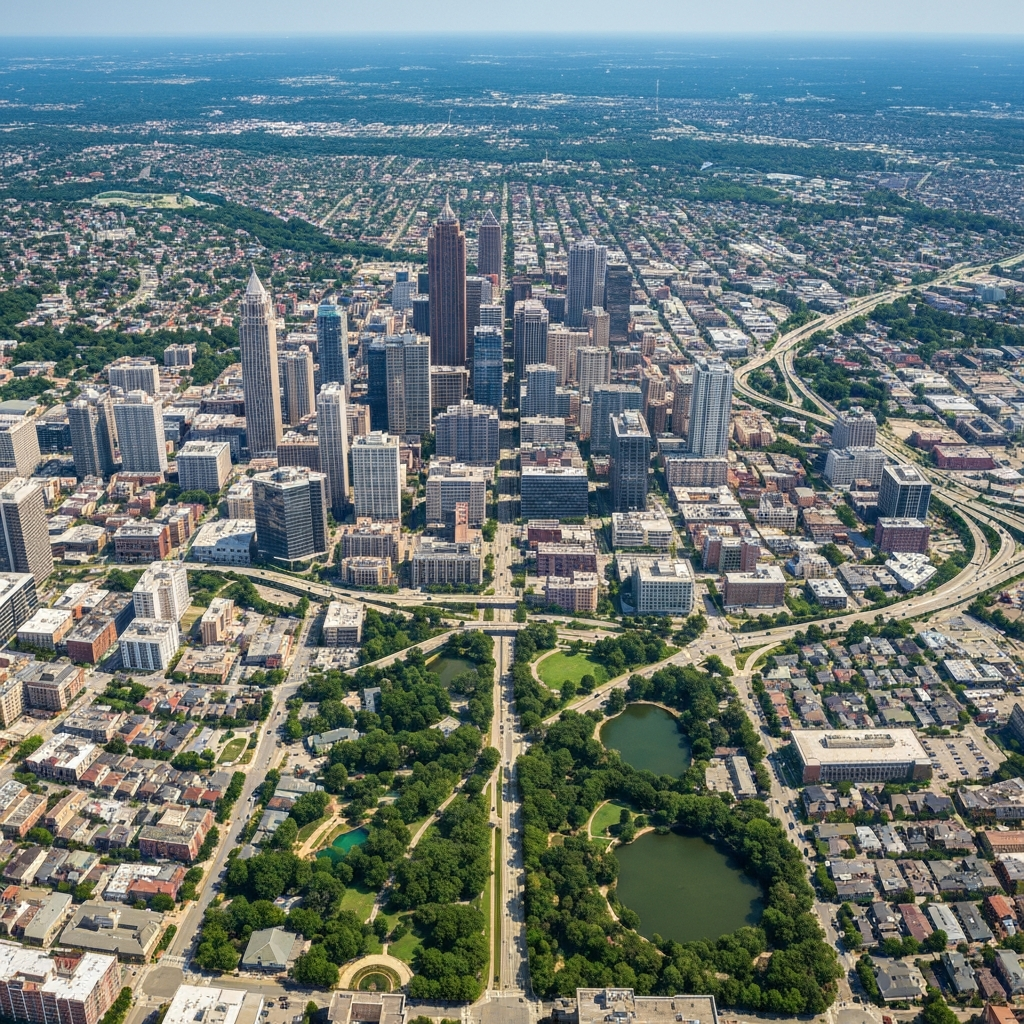
As Atlanta continues to grow and urbanize, residents may notice that the city feels warmer than surrounding rural areas. This phenomenon, known as the Urban Heat Island (UHI) effect, results from human activities and urban development altering the natural environment.
What is the Urban Heat Island Effect?
The UHI effect occurs when urban areas experience higher temperatures than their rural counterparts. This temperature difference arises because materials like asphalt and concrete absorb and retain heat more than natural landscapes. In Atlanta, studies have shown that urban areas can be up to 8 degrees Fahrenheit warmer than surrounding suburban or natural landscapes. This increased heat not only affects comfort but also influences energy consumption and air quality.
Factors Contributing to Atlanta’s UHI
Several factors contribute to the UHI effect in Atlanta:
- Urban Development: The replacement of natural vegetation with buildings, roads, and other infrastructure reduces the land’s ability to cool through evaporation and shading.
- Building Materials: Common urban materials, such as dark rooftops and pavements, absorb more sunlight and retain heat longer than natural surfaces.
- Reduced Green Spaces: Limited tree cover and green areas decrease the natural cooling effects of shade and evapotranspiration.
Impacts of the UHI Effect
The UHI effect has several implications for Atlanta:
- Increased Energy Consumption: Higher temperatures lead to greater use of air conditioning, raising energy demand and costs.
- Health Risks: Elevated temperatures can exacerbate heat-related illnesses, particularly among vulnerable populations.
- Air Quality Degradation: Warmer temperatures can increase the formation of ground-level ozone, contributing to smog and respiratory issues.
Mitigation Strategies
Addressing the UHI effect requires a combination of strategies:
- Enhancing Green Spaces: Planting trees and creating parks can provide shade and promote cooling through evapotranspiration.
- Implementing Cool Roofs: Using reflective roofing materials can reduce heat absorption. The Atlanta City Council has considered legislation requiring new buildings to incorporate cool roof materials to combat the UHI effect.
- Promoting Sustainable Urban Planning: Designing urban areas with heat mitigation in mind, such as incorporating green roofs and reflective pavements, can help reduce the UHI effect.
By understanding and addressing the factors contributing to the Urban Heat Island effect, Atlanta can work towards creating a more comfortable and sustainable environment for all residents.