

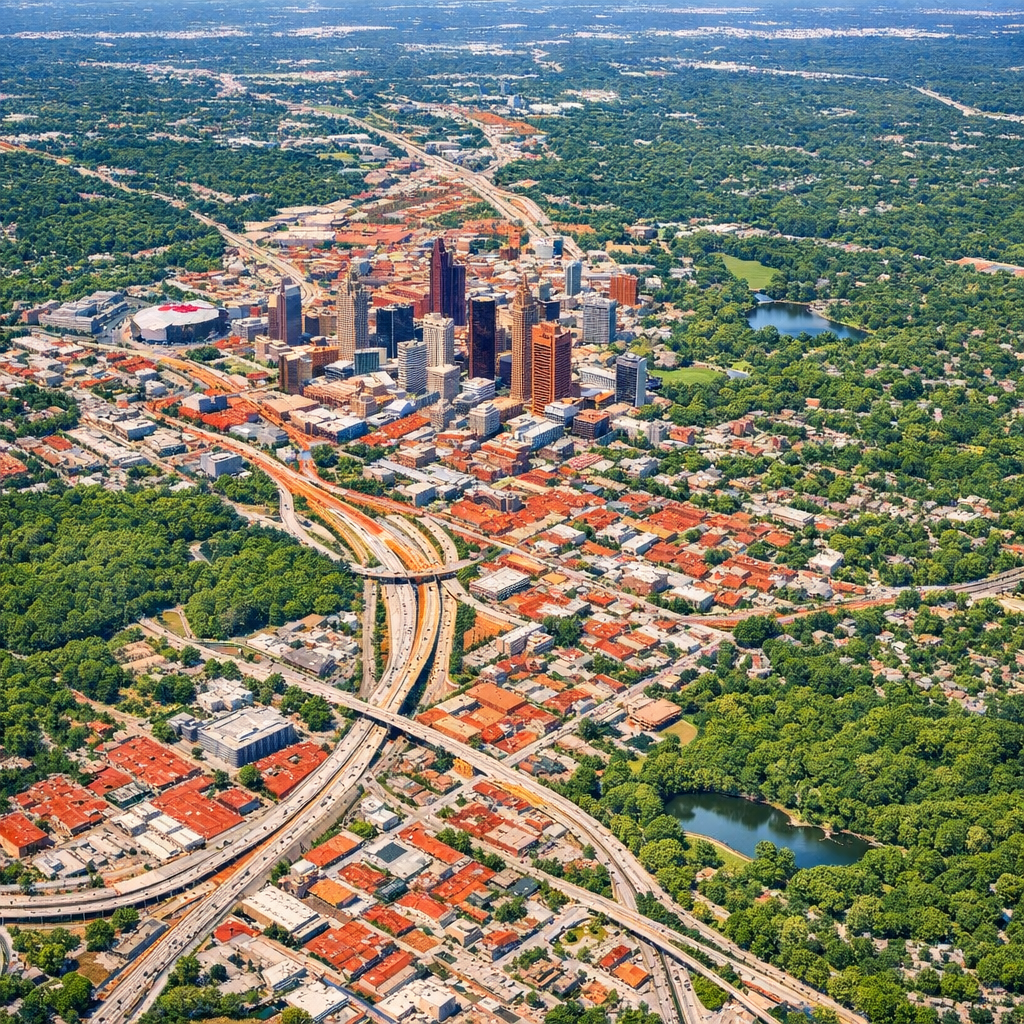
Atlanta’s rapid urbanization has led to a phenomenon known as the Urban Heat Island (UHI) effect, where urban areas experience higher temperatures than their rural surroundings. This temperature disparity arises from the replacement of natural landscapes with heat-absorbing materials like asphalt and concrete, which retain heat during the day and release it at night, keeping urban areas warmer.
Impact on Atlanta
Studies have shown that Atlanta’s urban core can be up to 8 degrees Fahrenheit warmer than its surrounding areas. This increase in temperature not only affects the comfort of residents but also has broader implications for energy consumption, air quality, and public health. Elevated temperatures can lead to higher energy demand for cooling, increased formation of ground-level ozone, and heightened risks of heat-related illnesses.
Contributing Factors
The design and density of urban development play significant roles in the intensity of the UHI effect. Research indicates that lower-density residential areas contribute more to surface heat than higher-density developments. This is due to the larger expanses of impervious surfaces and reduced vegetation in sprawling neighborhoods.
Mitigation Strategies
To combat the UHI effect, Atlanta has been exploring several strategies:
- Cool Roofs: Implementing reflective roofing materials can reduce heat absorption. The Atlanta City Council has considered legislation requiring new constructions and roof replacements to use cool roof materials, aiming to lower the city’s overall temperature.
- Urban Greening: Increasing tree canopy and green spaces can provide shade and cool the environment through evapotranspiration. Efforts to plant more trees and create green roofs are underway to mitigate heat.
- High-Density Development: Encouraging compact, moderate-to-high-density developments can reduce the extent of impervious surfaces and promote more efficient land use, thereby lessening the UHI effect.
Community Involvement
Residents can also contribute by adopting heat-mitigating practices such as planting trees, using reflective materials for driveways and patios, and supporting local policies aimed at reducing urban heat. Community engagement is crucial in creating a more sustainable and comfortable urban environment.
Understanding and addressing the Urban Heat Island effect is essential for Atlanta’s resilience against climate change. Through combined efforts in policy, urban planning, and community action, the city can work towards a cooler and healthier future.