

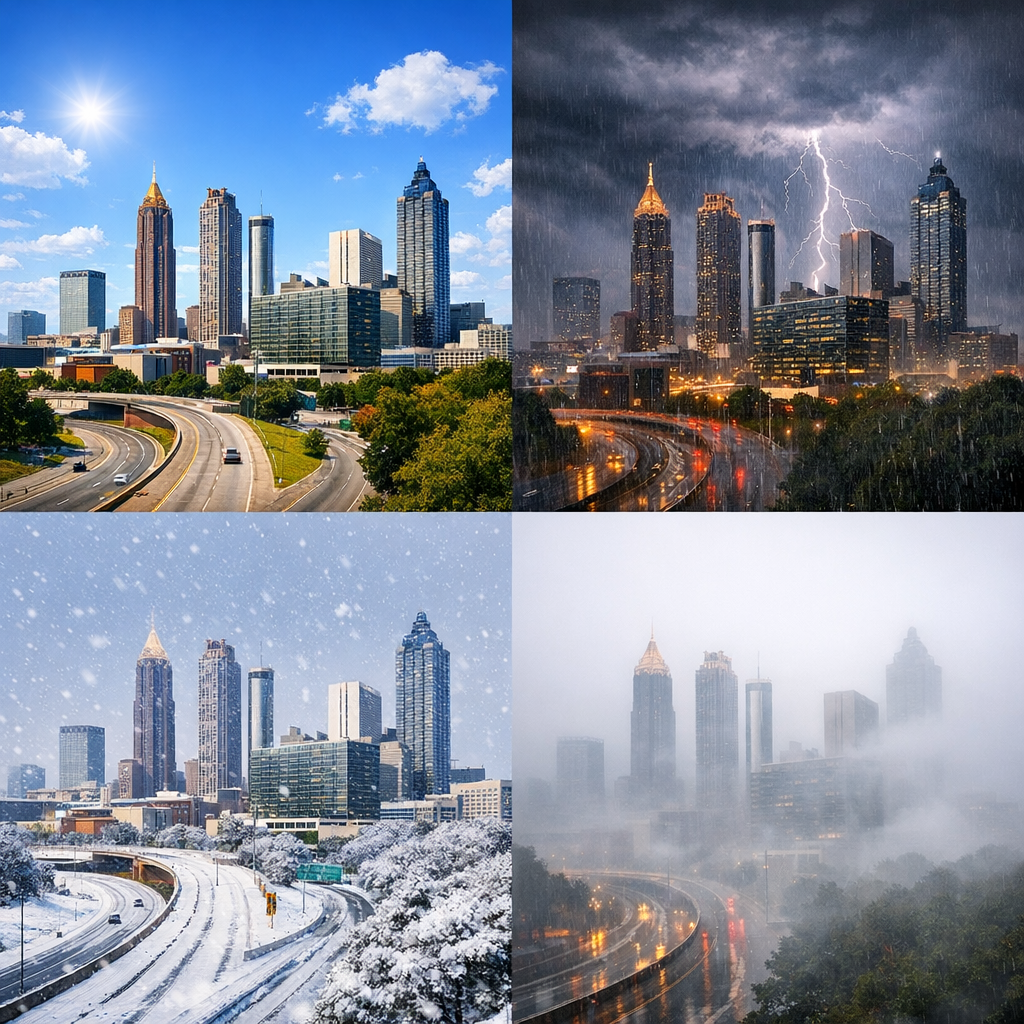
Atlanta, Georgia, experiences a humid subtropical climate, marked by hot, humid summers and mild winters. Rainfall is fairly evenly distributed throughout the year, with northern Georgia receiving between 50 to 60 inches annually.
Seasonal Overview
Winter (December–February)
Winters in Atlanta are generally mild, with average highs in the mid-40s to mid-50s°F and lows in the low 30s°F. Snowfall is rare, but occasional ice storms can occur.
Spring (March–May)
Spring brings comfortable temperatures ranging from the 60s to upper 70s°F. This season is known for blooming trees and higher pollen levels.
Summer (June–August)
Summers are hot and humid, with temperatures often reaching the mid-80s to low 90s°F. Afternoon thunderstorms are frequent during this period.
Fall (September–November)
Fall offers pleasant weather, with temperatures in the 60s to upper 70s°F. The season is characterized by lower humidity and colorful foliage.
Environmental Considerations
Atlanta’s air quality has seen improvements, with a 2.3% decrease in fine particle pollution from 2021-2023 compared to 2014-2016. However, pollution from roadways remains a concern.
The city faces challenges with recycling, as up to 50% of homes, particularly multifamily units, may be sending recyclables to landfills. Efforts are underway to address these issues.
Flash flood warnings have been increasing in Georgia, reflecting a nationwide trend linked to climate change. In 2025, 27 flash flood warnings were issued, highlighting the need for improved infrastructure to manage extreme weather events.
Understanding Atlanta’s climate and environmental challenges is essential for residents and visitors alike. Staying informed and proactive can help mitigate the impacts of these issues on daily life.